Process over state.
Stasis is not a legal state. A value is an unfolding. It has a trajectory, a shape, a coupling — not just a number.
 NEW CODE
/ BRAND STYLE GUIDE
NEW CODE/ CONTENTSNEW CODE/ NC—001
NEW CODE
/ BRAND STYLE GUIDE
NEW CODE/ CONTENTSNEW CODE/ NC—001Code was never natural.
We naturalised it.
Seventy years of programming languages were a compromise — tilted, by necessity, toward the humans who had to read them. That era is closing. The reader has changed.
NEW CODE/ NC—002We write source text optimised for machine interpretation. Humans declare what they want, what they forbid, and what must remain true — and the compiler, an AI, produces the rest.
Our mission is to close the interface bottleneck between human intent and machine execution, and to do it with the rigour of a language specification — not the casualness of a chatbot.
NEW CODE/ NC—003A decade from now, software will be written the way music is composed: a score of intent, rendered in real time by an instrument capable of interpreting it. The source file will be a contract; the runtime, a performance.
New Code is the score notation. We aim to make it as precise as set theory, as expressive as a waveform, and as honest as blood work — loud where it fails, quiet where it holds.
NEW CODE/ NC—004NEW CODE/ NC—005Stasis is not a legal state. A value is an unfolding. It has a trajectory, a shape, a coupling — not just a number.
Every value carries ⟨f, A, φ, σ⟩. Collapsing to a number is legal — but destructive, explicit, and signed for in the type.
Every function declares intent, forbid, ensure. Not comments — part of the type system.
When two values must stay consistent, the language says so. Transformations propagate automatically. Consistency is no longer a hope.
Any reduction to a scalar uses ⌊·⌉ and declares what is lost. Information loss is visible in the signature, never buried.
When the compiler cannot satisfy a clause it names the clause. When a process is unsustained, it decays to the square-wave attractor.
NEW CODE/ NC—006We sound the way the language reads — compressed, precise, honest about failure. Never breathless. Never folksy. We are writing for an audience who can already tell when an idea is hollow; we respect their time by being short and being right.
Choose one word where two would do. Name the thing. Use symbols where they are clearer than prose.
Assume the reader is literate. No apologies for difficulty. The difficulty is part of the product.
Say what works, what doesn't, what's approximate. Hedge once, commit the rest of the sentence.
No superlatives. No revolution talk. No emoji. No exclamation. If the thing is remarkable, the reader will notice.
NEW CODE/ NC—007"A programming language whose primary reader is an AI system."
"54 passing tests. 4 open clauses. One known limit."
"Intent verification is plausibility, not proof."
Declarative · Numerically honest · Names the limit
"The future of coding, reimagined for the AI era!"
"Supercharge your workflow with magical AI-powered code."
"It's not code. It's an experience."
Reframing · Empty promises · Suspense theatrics
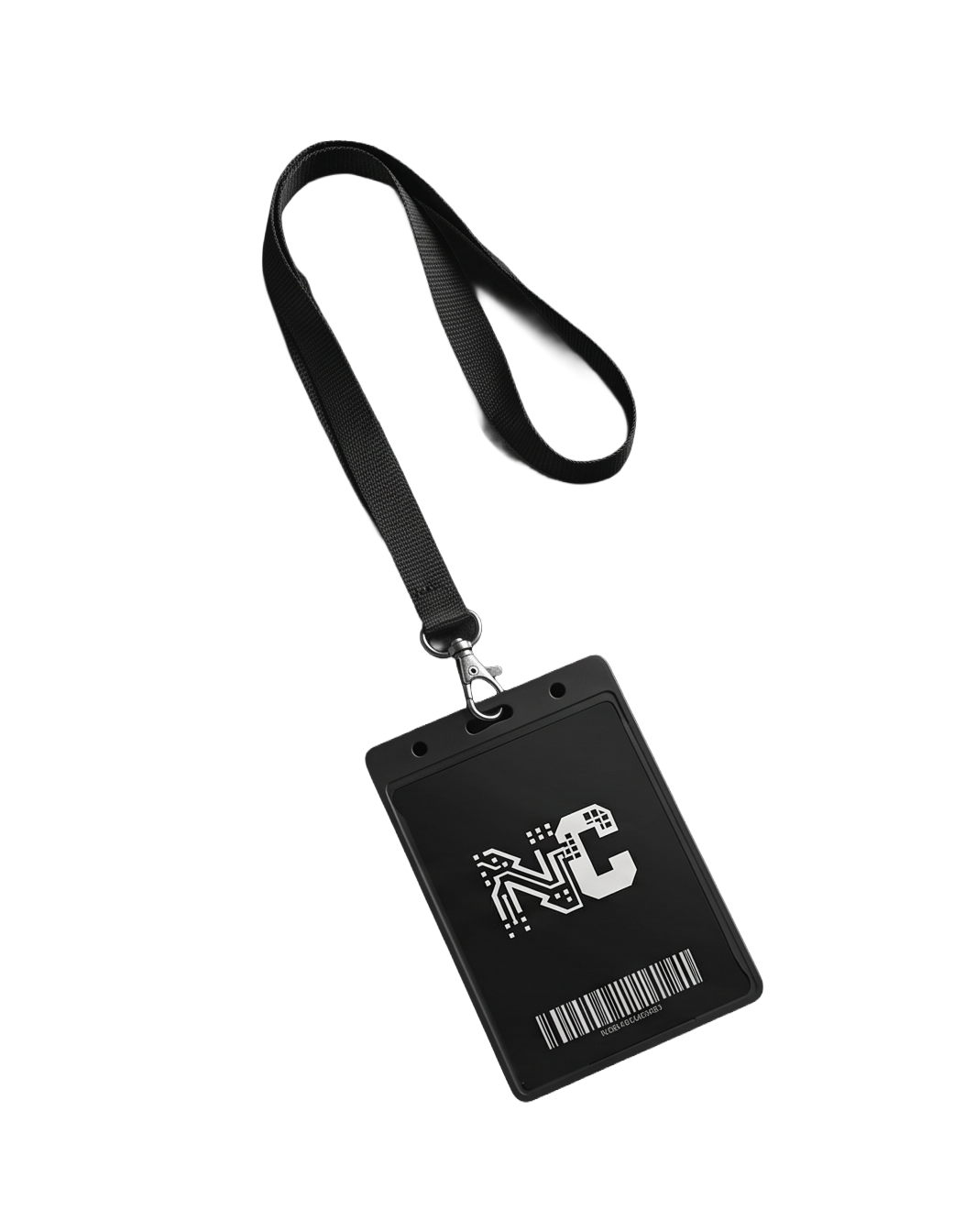
NEW CODE/ NC—008The mark fuses the initials N C with a PCB-trace geometry — the letterform on the right anchored in a solid, stencil-cut C; the left dissolving into signal paths and pads. It is read in two passes: shape first, circuit second. Both are true.
NEW CODE/ NC—009

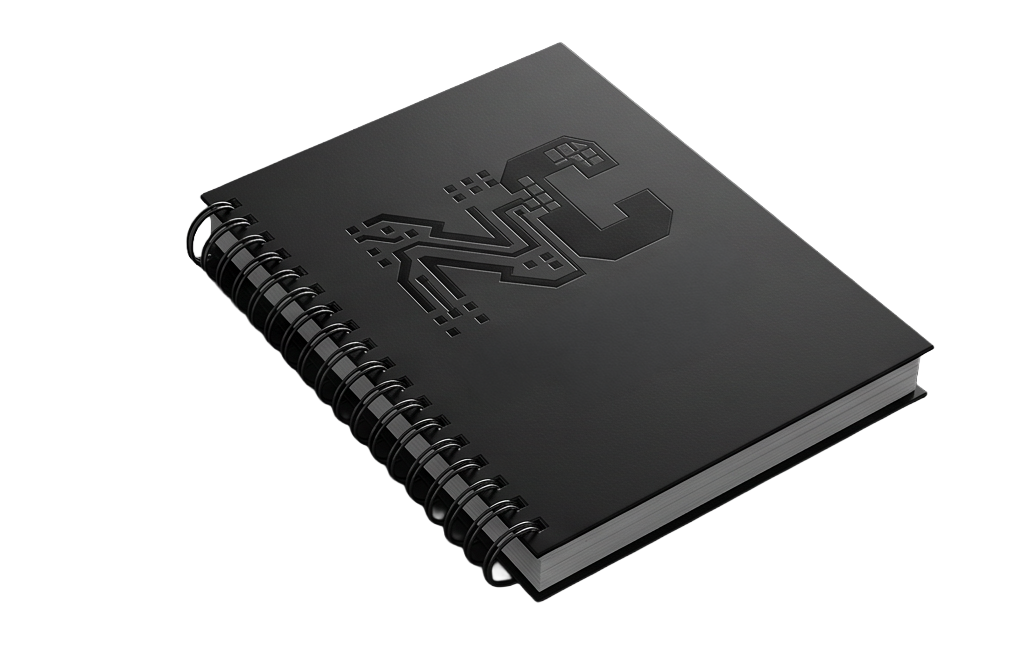
Use the primary mark wherever possible. Inverse for light-coloured print surfaces. Accent for merchandise patches and single-colour stamps. Mono only when process-colour printing is not available.
NEW CODE/ NC—010
NEW CODE/ NC—011
NewCode+
NEW CODE/ NC—012Signal Orange is non-negotiable — it names the brand the way a chord names a key. Deep Black is the default canvas; Bone is reserved for print & stationery. Carbon and Steel carry the majority of body copy and supporting structure.
NEW CODE/ NC—013Default canvas. Every surface — web, print, product — starts from black. The page is the silence before the downbeat.
Rule lines, panel fills, secondary surfaces. Never a fill without a black neighbour — contrast keeps the structure legible.
Body copy, body copy, body copy. The words do the lifting; the colour gets out of the way.
Signal only. Primary CTA, status, emphasis, the mark. If more than one orange competes on a slide, one of them is wrong.
NEW CODE/ NC—014A geometric grotesk with an engineer's bearing. Used for every display surface — covers, section titles, hero lines, large numerals. Tracked slightly tight at display sizes for density.
Write the intent.
Let the machine write the code.
NEW CODE/ NC—015A contemporary monospace with calm geometry — used for source code, labels, metadata, coordinates, keyboard shortcuts and any legal-style micro-copy. The workhorse of the brand.
fn classify(s : 𝕎, k : [sig])
→ sig | fault<no_match>
NEW CODE/ NC—016NEW CODE/ NC—017Icons are drawn on a 64 × 64 grid at 1.5 px stroke. Square ends, no rounded terminals, no fills except for explicit scalar markers. They are diagrams, not decorations.
NEW CODE/ NC—018NEW CODE/ NC—019Motion mirrors the language: a process is drawn — literally stroked — from start to end. Without input it decays, visibly, to the square-wave resting state. No bounces. No elastic. No drop shadows in transit.
NEW CODE/ NC—020Every surface is ruled. A visible hairline at the outer margin makes the page feel like a technical drawing — the structure is not hidden, it is part of the aesthetic.
NEW CODE/ NC—021NEW CODE/ NC—022
NEW CODE
NEW CODE/ NC—023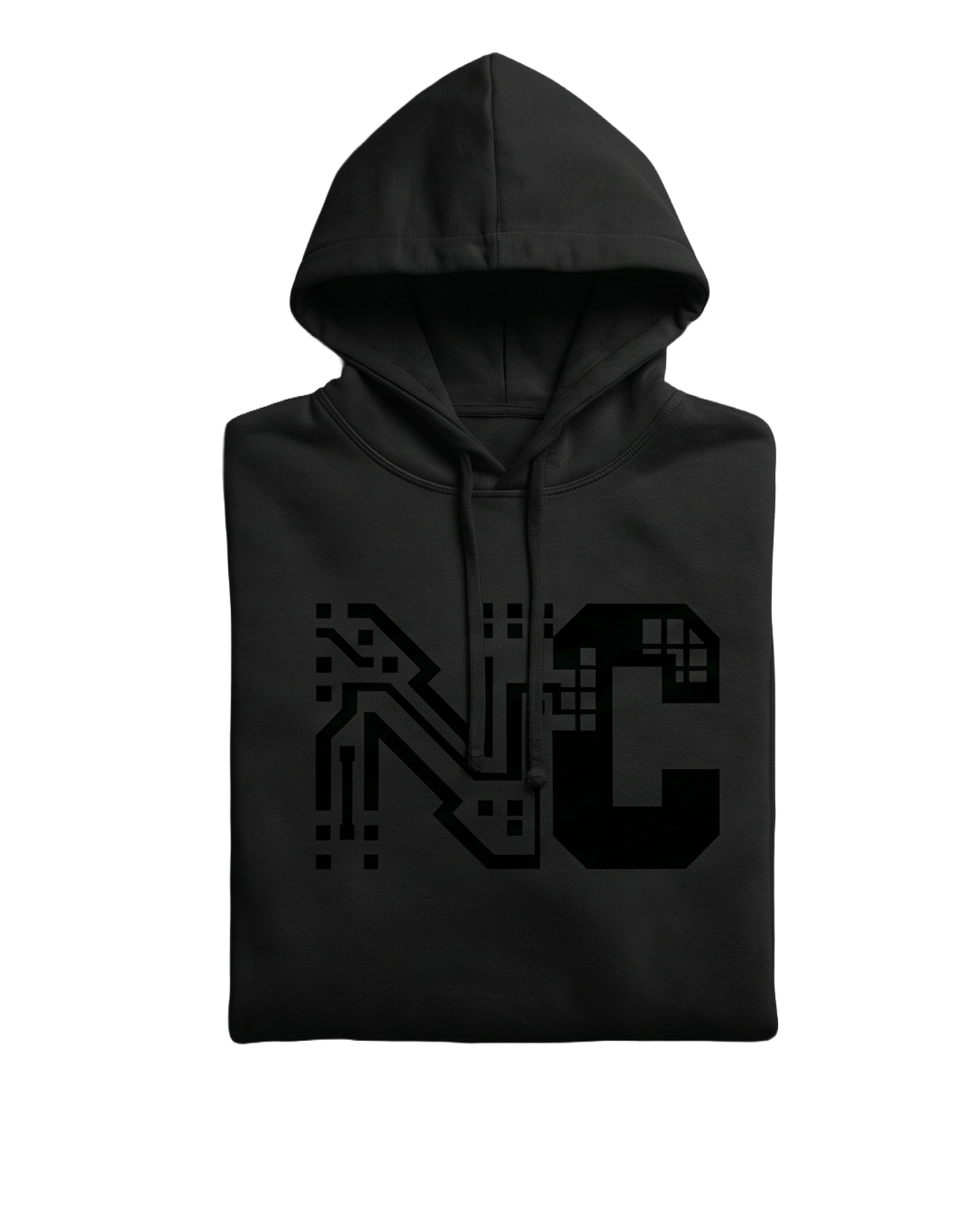
 NEW CODE/ NC—024
The conductor
raises the baton.
This document is v1.0 of the New Code brand system. It will change when the language changes; every revision is dated, numbered, and loud about what moved. Until then — hold the line, hold the orange, hold the silence around it.
ULTRANARRATIVE
LTD · APR 2026